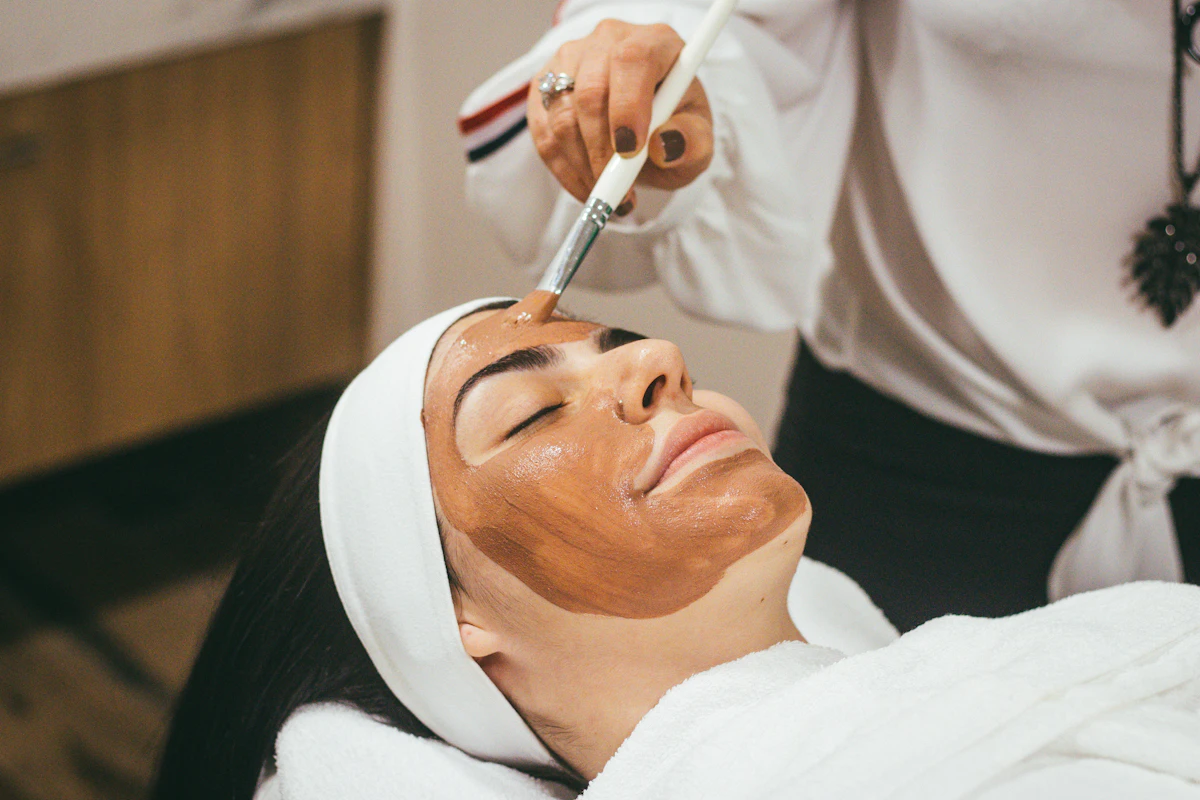
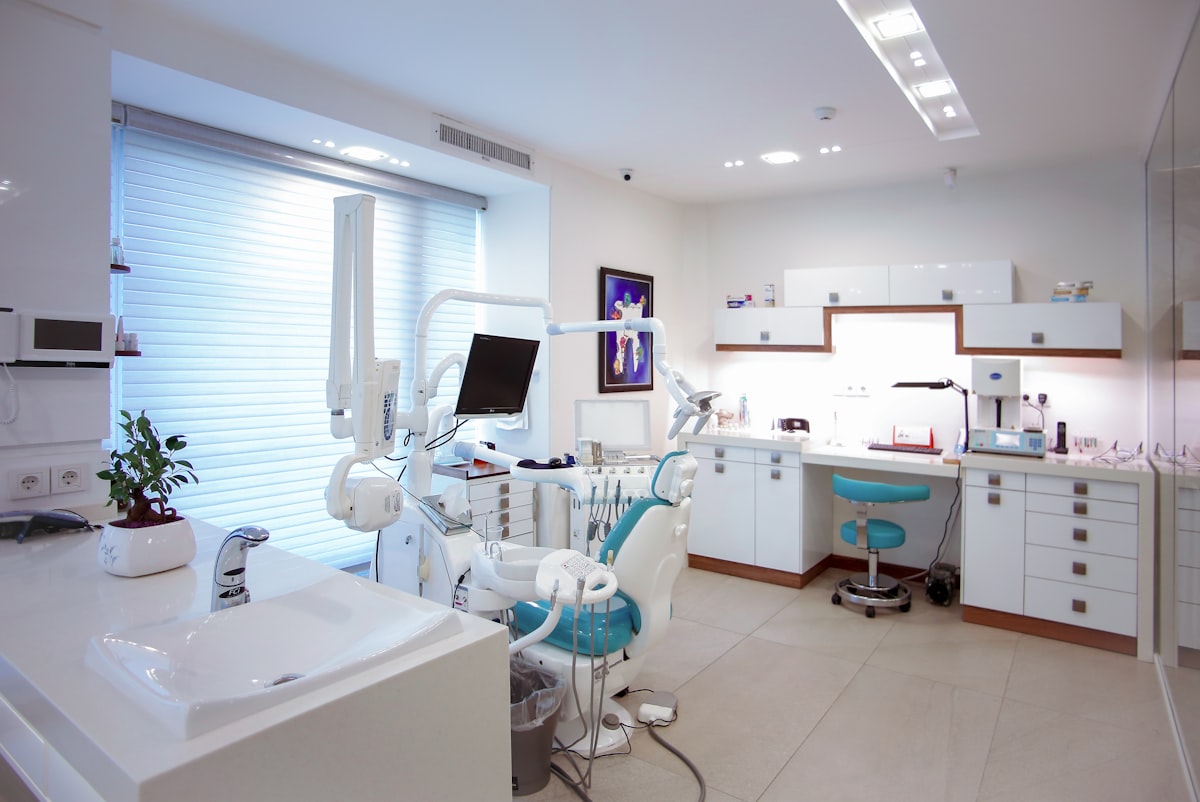
Pull up five med spa websites in any city. You will see the same stock photo of a woman touching her jawline, the same "Rejuvenate Your Beauty" headline, and the same teal-and-white color palette. Close your eyes and try to remember which practice was which. You cannot.
That is the branding problem in medical aesthetics. Most practices look, sound, and feel interchangeable. When everything looks the same, patients default to whoever shows up first on Google or whoever charges the least. Both of those positions are expensive to maintain and easy to lose.
Med spa branding is how you escape that trap. A strong brand makes patients choose you specifically, return without prompting, refer their friends by name, and pay premium prices without flinching. This guide covers what branding actually means for a med spa, how to build one that works, and the mistakes that keep most practices invisible.
Med spa branding is not a logo
The most common misconception: branding equals a logo and a color palette. Those are brand assets. They are outputs of the branding process, not the process itself.
Your brand is the sum of every interaction a patient has with your practice. The website they found through a Google search. The tone of the text message confirming their appointment. The scent in the waiting room. The way your injector explains the treatment plan. The follow-up email they receive 48 hours later.
Every one of those touchpoints either reinforces or undermines the story your practice tells. A beautiful website followed by a chaotic front desk experience creates cognitive dissonance. An approachable Instagram presence followed by a cold, clinical consultation feels dishonest. Patients notice these gaps even when they cannot articulate them. They just leave and book somewhere else.
Branding is the work of making all of those touchpoints intentional and consistent. It starts with deciding who you are and who you serve, then building systems that communicate that identity at every turn.
Start with positioning, not aesthetics
Before you pick colors or hire a designer, answer three questions:
-
Who is your ideal patient? Not "women aged 25 to 55." That describes half the population. Get specific. Are you the practice for busy professionals who want treatments during lunch breaks? The destination for brides-to-be preparing for their wedding? The provider young men trust for their first Botox appointment? Each of those patients expects a different experience, different messaging, and different visual identity.
-
What is your one thing? Every memorable brand stands for something specific. It might be clinical precision, luxury pampering, accessible self-care, or cutting-edge technology. You cannot stand for all of them. Trying to be everything to everyone is how you end up looking like every other med spa in town.
-
Who are you not? Defining what you are not is just as useful as defining what you are. If you are the high-end, results-driven practice, you are not the discount Groupon provider. If you are the warm, approachable neighborhood med spa, you are not the sterile clinical environment. This clarity shapes everything from your pricing to your hiring decisions.
Write these answers down. Share them with every team member. This is your brand positioning, and it should inform every decision that follows.
Visual identity: more than colors and a logo
Once your positioning is clear, your visual identity should express it. The components:
Color palette. Colors carry psychological associations. Navy and gold signal luxury and authority. Soft pinks and neutrals feel approachable and feminine. Black and white reads clinical and modern. Choose colors that match your positioning, then use them everywhere. Your website, business cards, treatment room decor, staff uniforms, social media templates, and email headers should all pull from the same palette.
Typography. Fonts communicate personality before a single word is read. A serif font like Playfair Display says "established and elegant." A clean sans-serif like Inter says "modern and efficient." Script fonts can feel personal but become unreadable at small sizes. Pick two fonts maximum: one for headings, one for body text.
Photography style. This is where most med spas go wrong. Stock photography is a brand killer. A study from the Nielsen Norman Group found that users consistently ignore stock photos and engage significantly more with authentic images. Invest in a professional photoshoot of your actual practice. Capture your treatment rooms, your team, your equipment, and (with consent) your patients. Shoot in your brand's color palette. Use natural light when possible.
Logo. Your logo matters, but less than you think. A clean, legible logo that reproduces well at small sizes (think favicon, social media profile photo, embroidery on scrubs) is more functional than an elaborate design that looks beautiful at billboard scale and muddy everywhere else.
Create a brand guide document. One page is enough. Include your color hex codes, fonts, logo usage rules, and 3 to 5 example photos that represent your visual direction. Hand this to anyone who creates content for your practice. Consistency compounds. Every on-brand touchpoint reinforces recognition. Every off-brand one dilutes it.
Voice and tone: how your brand sounds
Visual identity is what patients see. Voice is what they hear, read, and feel.
A med spa's voice lives in its website copy, social media captions, email subject lines, intake forms, text message reminders, and the script your front desk uses when answering the phone. If these all sound like they come from different practices, your brand has a voice problem.
Define your voice along two spectrums:
-
Clinical authority vs. warm approachability. Are you the Harvard-trained dermatologist who speaks in precise medical terms? Or the friendly neighbor who makes aesthetics feel accessible and fun? Most successful med spas land somewhere in the middle, but you should know where you lean.
-
Formal vs. conversational. "We invite you to schedule a consultation" feels different from "Ready to see what we can do? Book a visit." Neither is wrong. But one aligns with your positioning and the other does not.
Write down 5 words that describe your voice. "Confident. Warm. Specific. Direct. Knowledgeable." Use those words as a filter for every piece of content your practice produces. When a social media post or email feels off, check it against your voice words. The misalignment usually becomes obvious.
The patient experience IS your brand
Here is where branding separates from marketing. Your in-practice experience is the most powerful brand asset you own, and no agency can build it for you.
Walk through your practice as if you were a first-time patient. What do you see when you walk through the door? Is the reception area clean, styled, and consistent with your website's aesthetic? Or does it look like a different place entirely?
The waiting room. Temperature, lighting, scent, music, seating comfort, reading material. Each one communicates something. A waiting room with harsh fluorescent lighting and a mounted TV playing the news tells patients "we do not care about your experience here." A waiting room with warm lighting, a curated playlist, and sparkling water on the counter tells patients "you made the right choice."
Staff presentation. Matching scrubs or uniforms in your brand colors. Name badges. A consistent greeting. These details feel small. They are not. A Journal of Consumer Research study found that visual uniformity among staff increases consumer trust and perceived competence.
The consultation. Your injector's bedside manner is your brand in human form. Patients remember how they felt during the consultation more than what was said. Training your team to listen first, explain clearly, and never rush creates the kind of experience patients talk about with friends.
Post-treatment follow-up. A text the next day asking how the patient feels. A personalized email with aftercare instructions. A check-in call after a more involved procedure. These touchpoints cost almost nothing and generate outsized loyalty. Most practices skip them entirely.
Ready to grow your practice?
Get a custom strategy for your med spa
Schedule Your Strategy SessionNo commitment required. No credit card.
Your website is your brand's flagship
Your website is where first impressions are formed. For 80% of prospective patients, it is the first (and sometimes only) interaction with your practice before they decide to book or bounce.
A website that reflects your brand does three things:
-
Looks like your practice feels. If walking into your med spa feels calm and luxurious, your website should feel calm and luxurious. If your practice is energetic and modern, the site should be too. Disconnects between the online and offline experience create distrust.
-
Sounds like your team. The copy on your website should read the way your best team member talks to patients. If your front desk is warm and direct, your website should not read like a medical textbook. If your injectors lead with clinical expertise, your website should reflect that authority.
-
Works fast and ranks well. A gorgeous website that loads in 6 seconds and never appears in search results is an expensive brochure. Your site needs to load in under 2 seconds, be mobile-optimized (most med spa traffic is mobile), and be built with SEO fundamentals from the ground up. Beauty without performance is a wasted investment.
Your photography, color palette, typography, and voice all come together on the website. It is the single place where every brand element either coheres or falls apart.
Consistency across every channel
A brand gains strength through repetition. Patients should recognize your practice whether they find you through Google, Instagram, a referral from a friend, or a postcard in their mailbox. Every channel in your med spa marketing plan should feel like it comes from the same practice.
Social media. Use branded templates for posts. Consistent filters on photos. Same voice in captions. Your Instagram grid should look cohesive at a glance. A prospective patient scrolling your profile makes a judgment within 3 seconds. If every post looks like it was created by a different person, you appear disorganized.
Email. Your email templates should match your website. Same colors, same fonts, same logo placement. The tone should be consistent whether you are sending a booking confirmation, a treatment reminder, or a seasonal promotion.
Print and physical materials. Business cards, brochures, gift cards, and loyalty cards should all use the same visual system. Even the pen at the front desk and the to-go bag for aftercare products are brand touchpoints.
Online reviews and reputation. How you respond to Google reviews is a brand expression. A thoughtful, branded response to a negative review tells every prospective patient reading it that you care. A defensive or generic reply does the opposite.
The practices that maintain brand consistency across 8 to 10 touchpoints consistently outperform those that look polished in one or two channels and sloppy in the rest. Patients notice the gaps.
How branding affects your pricing power
This is the part that makes branding a revenue conversation, not just a design conversation.
Strong brands charge more. Period. When patients perceive your practice as distinctive, trustworthy, and high-quality, they accept higher prices without shopping competitors. When your brand is generic, patients treat you as a commodity and choose based on price alone.
Think about it this way: two med spas in the same city offer the same Botox, administered by similarly qualified injectors. One has a cohesive brand with professional photography, a modern website, consistent social media, and a polished patient experience. The other has a template website, stock photos, and an inconsistent presence.
The first practice charges $14 per unit. The second charges $11 and still struggles to fill the schedule. The difference is not skill. It is perceived value. Branding creates that perception.
Discounting is what practices do when their brand is not strong enough to justify their prices. Before dropping your prices, invest in the brand. Professional photography, a website refresh, and staff training on patient experience can generate more revenue than any coupon campaign.
Common med spa branding mistakes
After 20+ years in medical aesthetics, I have seen the same branding mistakes repeated across hundreds of practices:
Using stock photography. Nothing screams "we are like everyone else" louder than the same Shutterstock model that appears on 40 other med spa websites. Invest $1,500 to $3,000 in a professional photoshoot. Use your real space, your real team, and your real patients. Authenticity converts.
Copying competitors. If every med spa in your market uses teal and white, using teal and white is the worst possible decision. Blending in is the opposite of branding. Look at what your competitors do, then do something different.
Ignoring the name. Practice names like "Rejuvenate Med Spa" or "Radiance Aesthetics" are used by dozens of practices across the country. A distinctive name is easier to trademark, easier to rank for in search, and easier for patients to remember and recommend.
Inconsistent social media. Posting a professional treatment photo on Monday and a blurry team lunch selfie on Tuesday signals a lack of standards. Both types of content can work if they are shot and edited within the same visual framework.
Designing for yourself, not your patients. Your personal taste does not matter as much as what resonates with your ideal patient. If your target patients are women aged 35 to 50 with household incomes above $150,000, the brand should reflect their aesthetic preferences, not your favorite color.
Skipping the experience. Pouring money into a beautiful website while the waiting room has folding chairs and fluorescent lights is like wearing a designer suit with dirty shoes. Patients notice what is real more than what is digital.
Where to start if your brand needs work
You do not need to rebuild everything at once. A phased approach works better because it lets you test each change and measure the impact.
Month 1: Positioning. Answer the three positioning questions from earlier. Write your brand voice words. Share them with your team.
Month 2: Photography. Book a professional shoot. Capture your space, team, and (with consent) real patients. This single investment improves your website, social media, Google Business Profile, and print materials all at once.
Month 3: Website and digital presence. Update your site with the new photography and voice. Align your social media templates and email design. Update your Google Business Profile photos.
Month 4: Patient experience. Walk through your practice as a first-time patient. Fix the gaps between your online brand and your in-person experience. Train your team on brand voice and patient interaction standards.
This is not a one-time project. Your brand evolves as your practice grows, as your patient base shifts, and as your market changes. The practices that treat branding as ongoing work, not a checkbox, are the ones patients remember and recommend.
At Pronk MedSpa Marketing, we help med spas build brands that patients remember, search engines reward, and competitors cannot replicate. And because we work with only one practice per city, your brand strategy stays yours. Schedule a strategy session to see where your brand stands and what it would take to own your market.
Frequently Asked Questions
Ready to grow your practice?
Get a custom strategy for your med spa
Schedule Your Strategy SessionNo commitment required. No credit card.