Most med spa business plans are too vague to be useful. They read like templates pulled from a blog post (ironic, yes), filled with phrases like "we will provide exceptional patient care" and "revenue is expected to grow year over year." No specifics. No real projections. Nothing a bank or investor could actually evaluate.
A good business plan is your financial roadmap. It tells you exactly how many treatments you need per week to cover rent. It tells you when you will break even. It tells you what happens if patient volume comes in 30% below projections. And if you ever need an SBA loan or outside investment, it is the document that gets you funded.
I have reviewed hundreds of med spa business plans over 23 years in this industry. The ones that lead to profitable practices share a pattern. Here is that pattern, section by section.
Executive summary: write this last
Your executive summary goes on page one, but write it after everything else. It is a one-to-two page overview of the entire plan. Lenders read this first and decide whether to keep going.
A strong executive summary answers six questions:
- What treatments will you offer, and to whom?
- Where will you operate, and why that market?
- How much capital do you need, and what will you spend it on?
- When will you reach break-even?
- Who is on your team, and what makes them qualified?
- What is your projected revenue for years one through three?
Keep it tight. No marketing fluff. A lender wants numbers and specifics, not your vision for "transforming lives through aesthetic excellence."
Market analysis: prove there is demand
This section answers a simple question: are there enough potential patients in your area who will pay for the treatments you plan to offer?
Demographics
Pull census data and income reports for your target area. You need:
- Population within a 15-mile radius of your planned location
- Household income distribution (your core demographic earns $75,000+, ideally $100,000+)
- Age and gender breakdown (women aged 25 to 54 are the primary med spa demographic, though the male aesthetic market is growing at 30% per year)
- Population growth trends (growing markets create new demand without requiring you to steal patients from competitors)
The U.S. Census Bureau's American Community Survey and your local economic development office both publish free demographic data. Pull the specific zip codes around your planned location, not broad metro-area averages.
Competitive analysis
Map every med spa, dermatology practice, and plastic surgery office within 10 miles. For each competitor, document:
- Their treatment menu and approximate pricing
- Their Google review count and average rating
- Their online visibility (do they rank for "[treatment] + [your city]" keywords?)
- Their estimated time in operation
- Any obvious gaps in their offerings
A market with 20 established med spas is not necessarily bad. It proves demand exists. What matters is whether you can differentiate on treatments, experience, or underserved demographics.
Industry data
Cite real numbers. The medical aesthetics market hit $18.5 billion in 2025 and is growing at roughly 14% per year. The American Med Spa Association reported that the average med spa generates $1.9 million in annual revenue. Non-surgical procedures outpace surgical procedures by more than 10 to 1.
These numbers show lenders that the industry is growing, not contracting.
Treatment menu and revenue model
Your treatment menu is not a wish list. It is a financial engine. Each treatment has a different margin, repeat rate, and patient lifetime value. Your plan needs to model all three.
Treatment mix strategy
| Category | Examples | Avg. Revenue/Treatment | Margin | Repeat Cycle | Role | |----------|----------|----------------------|--------|-------------|------| | Neurotoxins | Botox, Dysport, Xeomin | $350-$600 | 65-75% | Every 3-4 months | Anchor: highest repeat rate | | Dermal Fillers | Juvederm, Restylane, RHA | $600-$1,200 | 55-65% | Every 9-18 months | Revenue driver: high per-treatment value | | Body Contouring | CoolSculpting, Emsculpt | $2,000-$4,500 per cycle | 50-60% | 2-3 sessions | Ticket driver: highest per-patient revenue | | Facials/Peels | HydraFacial, chemical peels | $150-$350 | 70-80% | Monthly | Volume driver: builds patient base | | Weight Loss | Semaglutide, tirzepatide | $400-$800/month | 40-55% | Monthly ongoing | Growth driver: fastest growing category |
Revenue projections
Build three scenarios: conservative, moderate, and aggressive. Here is what realistic projections look like for a mid-market practice:
Year 1: $500,000 to $800,000. You are ramping up. Months one through four are slow. Patient volume builds through months five through eight. Months nine through twelve approach consistent booking.
Year 2: $800,000 to $1.5 million. Repeat patients compound. SEO traffic kicks in. Word-of-mouth referrals start flowing. You add staff and possibly a treatment room.
Year 3: $1.5 million and up. Your patient base generates predictable recurring revenue. Marketing becomes more efficient as organic channels mature. You start considering expansion.
Model monthly revenue, not annual. Lenders want to see the ramp-up curve, not a single annual number that hides the cash-burning early months.
Equipment strategy
Device-based treatments require significant capital. You have three options:
- Purchase outright: $75,000 to $200,000 per platform. Best ROI long-term, but ties up cash.
- Lease: $1,500 to $4,000 per month. Preserves capital for operating expenses. Most manufacturers offer 36 to 60-month terms.
- Certified pre-owned: 30 to 50% savings over new. Make sure warranty and service contracts transfer.
For a new practice, leasing your first devices usually makes more sense than buying. You preserve working capital for the ramp-up period when cash is tightest.
Operations plan
This section proves you can actually run the practice day to day.
Facility requirements
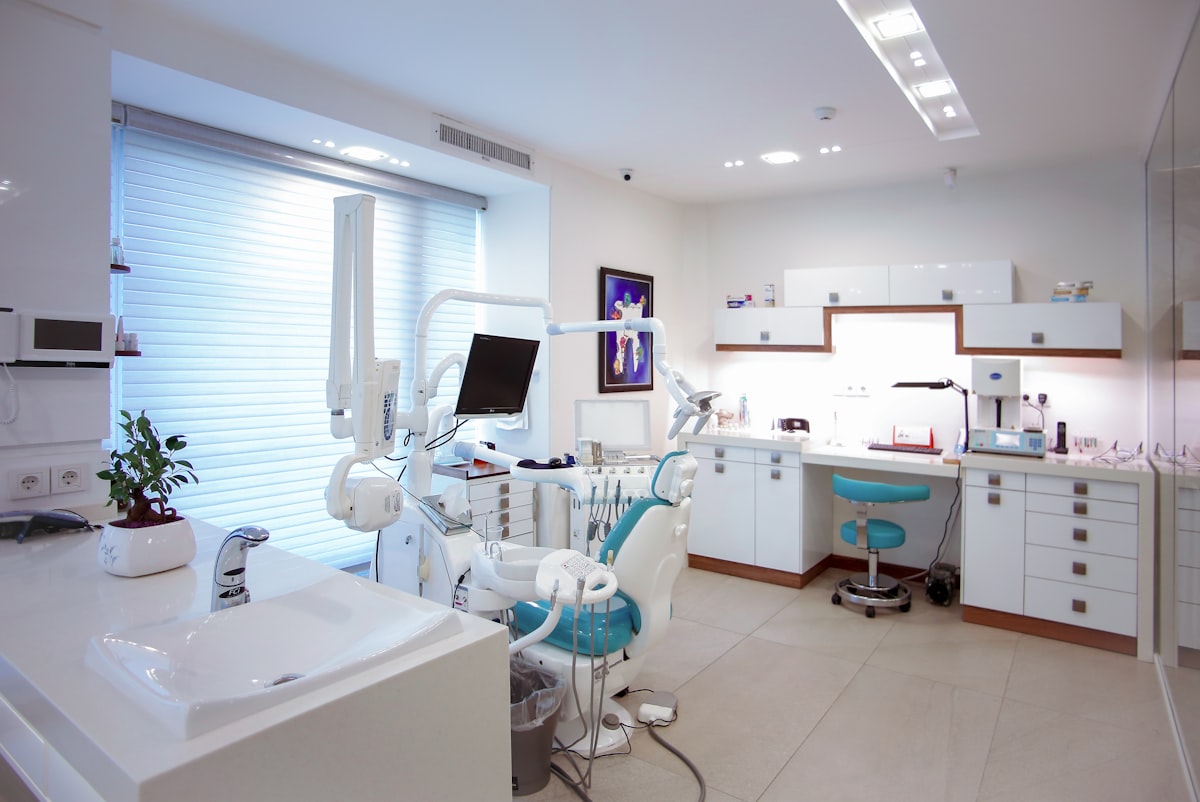
Most med spas need 1,500 to 3,000 square feet to start. Plan for:
- 2 to 4 treatment rooms (one per provider during peak hours)
- A consultation room (doubles as injector office)
- Secure product storage (many injectables require refrigeration)
- Reception and waiting area
- Staff break room and storage
Build-out costs run $50 to $150 per square foot depending on your market and how much existing infrastructure the space has.
Technology stack
Your plan should list the software systems you will use:
- Electronic health records (EHR) for clinical documentation
- Practice management software for scheduling and billing
- CRM platform for lead tracking, follow-up, and patient communication. A good CRM system pays for itself within 90 days by automating lead response and rebooking reminders.
- Point of sale for payment processing
- Marketing analytics for tracking ROI across channels
Hours and capacity
Calculate your maximum treatment capacity. If you have 3 treatment rooms and each handles 6 treatments per day across a 10-hour operating day (9am to 7pm), that is 18 treatments per day or roughly 90 per week.
At an average revenue of $450 per treatment, that ceiling is $40,500 per week or $2.1 million per year. You will not hit capacity for years, but knowing the ceiling tells you when you need to expand.
Staffing plan
Your team drives patient satisfaction, clinical quality, and operating costs. Hire carefully.
Core team (day one)
- Medical director (MD or DO): Required in nearly every state. Oversees clinical protocols, signs off on treatment plans, provides supervision. Compensation: $3,000 to $10,000 per month for part-time oversight, depending on state requirements and involvement level.
- Nurse practitioner or PA (1-2): Your primary injectors. Experienced NPs with a patient following can bring revenue from day one. Compensation: $80,000 to $130,000 base plus 10 to 20% commission.
- Licensed aesthetician (1): Handles facials, peels, and laser treatments (scope varies by state). Compensation: $45,000 to $65,000 base plus 5 to 15% commission.
- Practice manager (1): Runs operations, scheduling, billing, inventory. Hire this person first. Compensation: $55,000 to $85,000.
- Front desk coordinator (1): Owns the patient experience from first call to checkout. Compensation: $35,000 to $50,000 plus booking bonuses.
Growth hires (months 6-12)
As volume grows, add a second injector, a second aesthetician, and a dedicated marketing coordinator (or partner with a specialized med spa marketing agency).
Payroll as percentage of revenue
Target 25 to 35% of revenue for total payroll including benefits. If payroll exceeds 40%, you are overstaffed for your volume or underpricing your treatments.
Financial projections
This is the section lenders actually read. Be specific and conservative.
Startup costs
| Category | Low Estimate | High Estimate | |----------|-------------|--------------| | Lease deposit and first/last month | $15,000 | $45,000 | | Build-out and renovation | $75,000 | $300,000 | | Equipment (devices) | $100,000 | $400,000 | | Initial product inventory | $15,000 | $40,000 | | Furniture and fixtures | $20,000 | $60,000 | | Technology and software | $5,000 | $15,000 | | Licensing and legal fees | $10,000 | $30,000 | | Insurance (first year) | $15,000 | $30,000 | | Marketing launch budget | $15,000 | $40,000 | | Working capital (6 months) | $100,000 | $250,000 | | Total | $370,000 | $1,210,000 |
Monthly operating costs
For a mid-market practice, expect $40,000 to $80,000 per month in fixed and semi-variable costs:
- Rent: $5,000 to $15,000
- Payroll (including medical director): $20,000 to $45,000
- Product costs: 15 to 25% of treatment revenue
- Marketing: 10 to 15% of revenue
- Insurance: $1,200 to $2,500
- Software and technology: $1,000 to $2,500
- Supplies and miscellaneous: $2,000 to $5,000
Break-even analysis
Work backward. If your monthly overhead is $60,000 and your average treatment generates $450 at a 60% margin (meaning $270 in gross profit per treatment), you need 222 treatments per month to break even. That is roughly 56 treatments per week, or about 11 per day across a 5-day week.
Now connect that to marketing: if your consultation-to-booking rate is 60% and your lead-to-consultation rate is 20%, you need roughly 1,850 leads per month to hit break-even. At a $25 cost per lead, that is a $46,250 monthly marketing spend, which is obviously too high for a startup.
This is why the best med spa business plans optimize at every stage. A higher close rate (70% instead of 60%), better lead quality (30% consultation rate instead of 20%), and lower cost per lead ($15 instead of $25) changes the math dramatically. Suddenly you need 764 leads at $11,460 in marketing spend.
Your financial model should include these conversion rate assumptions and show how small improvements compound.
Marketing plan: where most business plans fail
I have reviewed business plans where the marketing section was three bullet points: "social media, website, and word of mouth." Lenders see right through this. And more importantly, a vague marketing plan means empty treatment rooms.
If you have read our guide on how to open a med spa, you know marketing needs to start 60 to 90 days before opening day. Your business plan should lay out exactly how.
Channel-level budget allocation (Year 1)
For a practice targeting $600,000 in first-year revenue with a 12% marketing budget ($72,000):
- Google Ads: $24,000 (33%). Captures patients actively searching for treatments. Start 30 days before opening. Read the full breakdown on Google Ads for med spas.
- SEO and content: $14,400 (20%). Build treatment-level pages targeting [treatment + city] keywords. Takes 3 to 6 months to compound, but generates the lowest cost-per-lead long term. Our med spa SEO strategy guide covers the full approach.
- Meta Ads (Facebook/Instagram): $12,000 (17%). Creates demand from patients not yet searching. Best for before-and-after content and new treatment awareness.
- Reputation management: $4,800 (7%). Automated review requests, monitoring, and response. A new practice with zero reviews loses patients to competitors with hundreds.
- Email and CRM automation: $6,000 (8%). Automated follow-up, rebooking reminders, and Boomerang™ campaigns for lapsed patients.
- Website and technology: $7,200 (10%). Professional site, landing pages, conversion optimization.
- Reserve/testing: $3,600 (5%). Test new channels, seasonal campaigns, local partnerships.
Lenders love specificity in the marketing section. Instead of "we will use digital marketing," show channel-level budgets, projected cost per lead, and patient acquisition cost by channel. This signals that you understand the economics, not just the tactics.
Patient acquisition cost targets
Your plan should define target patient acquisition costs by treatment category:
- Neurotoxins: $75 to $150 per new patient (lifetime value: $2,000 to $4,000)
- Fillers: $100 to $200 per new patient (lifetime value: $3,000 to $6,000)
- Body contouring: $150 to $300 per new patient (lifetime value: $5,000 to $15,000)
- Facials: $30 to $75 per new patient (lifetime value: $800 to $2,000)
When your patient acquisition cost is one-tenth of the patient's lifetime value, marketing is not a cost. It is an investment with a 10x return.
The compounding effect
Here is what most business plans miss: marketing channels do not operate in isolation. A patient finds you through Google Ads, books a Botox appointment, leaves a 5-star review, refers two friends, and returns for fillers six months later. That single paid lead generated five patients.
The practices that grow fastest build this flywheel into their projections. Your year-one cost per patient should decrease every quarter as organic channels mature, reviews accumulate, and referrals compound. Build that declining cost curve into your financial model. For more channel ideas, see our full list of med spa marketing strategies.
Ready to grow your practice?
Get a custom strategy for your med spa
Schedule Your Strategy SessionNo commitment required. No credit card.
Compliance and regulatory plan
Lenders and investors need to see that you understand the regulatory environment. More practically, getting compliance wrong can shut you down.
State medical board requirements
Regulations vary dramatically by state. Your plan should address:
- Medical director requirements: Hours of oversight, supervision protocols, on-site requirements
- Scope of practice laws: Which providers can perform which treatments in your state
- Corporate practice of medicine (CPOM) rules: Whether non-physicians can own a medical practice (states like California, Texas, New York, and Illinois restrict this)
- Prescriptive authority: Who can prescribe medications and order treatments
Check your state medical board for specific regulations. Work with a healthcare attorney who specializes in medical aesthetics before you form any entities.
HIPAA compliance
You are handling protected health information. Your plan should outline:
- Staff HIPAA training schedule (annually at minimum)
- Electronic record security measures
- Physical safeguard protocols (locked records, private consultation areas)
- Breach notification procedures
- Business associate agreements with all vendors who touch patient data
Insurance requirements
At minimum: professional liability for every provider, general liability for the facility, property insurance, workers' compensation, and cyber liability (HIPAA breaches are expensive). Budget $15,000 to $30,000 annually.
Standard operating procedures
Document your protocols for:
- Treatment consent forms
- Medical history intake
- Adverse event response
- Product storage and handling (many injectables require specific temperature ranges)
- Equipment maintenance and calibration schedules
- Emergency procedures
Putting it all together
A strong med spa business plan is 15 to 25 pages, specific to your market, and financially grounded. Here is your assembly checklist:
- Executive summary (1-2 pages, written last)
- Market analysis with demographic data and competitive mapping (3-4 pages)
- Treatment menu with revenue model and equipment strategy (2-3 pages)
- Operations plan with facility, technology, and capacity details (2-3 pages)
- Staffing plan with roles, compensation, and growth timeline (1-2 pages)
- Financial projections with startup costs, monthly operating costs, break-even analysis, and 24-month cash flow model (3-5 pages)
- Marketing plan with channel-level budgets and patient acquisition cost targets (2-3 pages)
- Compliance and regulatory plan with state-specific requirements (1-2 pages)
Review the plan quarterly. Your financial assumptions will change as real data comes in. The best practices treat their business plan as a living document, not a filing requirement.
Your plan needs a marketing partner
The financial model only works if the marketing plan delivers patients. That is where most med spa startups struggle. You know the clinical side. You know the patient experience. Building a multi-channel marketing engine that fills your treatment rooms from month one is a different skill set.
At Pronk MedSpa Marketing, we work with med spas from pre-launch through growth phase. We build the marketing infrastructure before you open, launch paid campaigns that generate patients from day one, and build the organic channels that reduce your cost per patient every quarter. And we guarantee city-level exclusivity. We will not work with your competitors.
Schedule a strategy session and we will walk through the marketing section of your business plan together. No commitment required. No credit card.