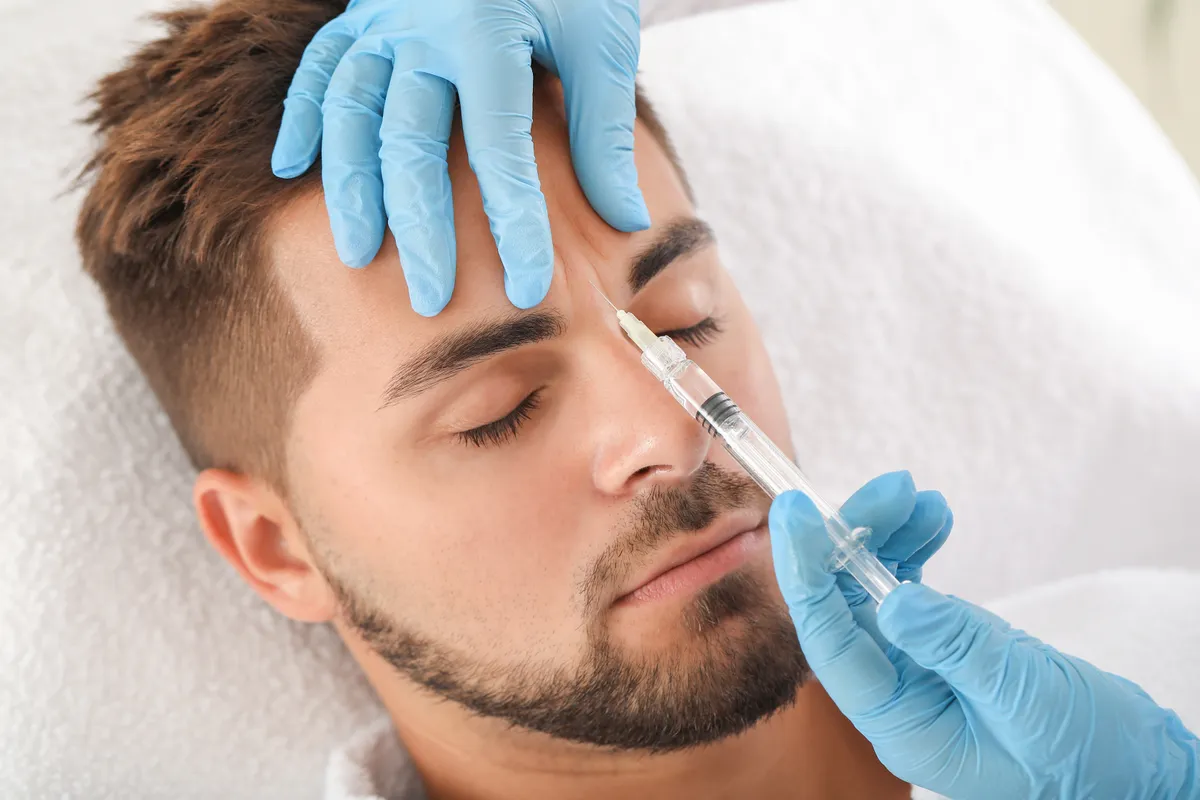
Male Botox procedures are up 400% since 2000. Most med spas still market to zero men.
That gap between male interest and male-targeted marketing is one of the biggest missed opportunities in medical aesthetics right now. The American Society of Plastic Surgeons counted 593,854 neuromodulator injections for men in 2024. Google searches for "male Botox" doubled year over year in 2025. A third of American men say they would consider Botox.
The industry calls it Bro-Tox. And if your practice is not building marketing around it, you are handing patients to whoever does first.
What Bro-Tox actually is (and why the name matters)
Bro-Tox refers to Botox and other neurotoxins (Dysport, Xeomin, Jeuveau) marketed to and performed on men. The treatment itself is identical to what women receive. Dosing runs higher because male facial muscles are larger and stronger, especially across the forehead and glabellar complex. A typical male treatment uses 20 to 40 units, compared to 15 to 30 for women.
The name started as a casual rebrand to make the conversation easier for men. It stuck because it gave male patients a way to talk about something they were already interested in without the stigma attached to "getting Botox."
The men booking Bro-Tox today
Men aged 35 to 50 make up the core Bro-Tox audience. These are mid-career professionals who want to look sharp on camera and in meetings. They do not want anyone to notice they did anything.
The fastest growth is coming from younger men. Gen Z and early millennial men between 26 and 34 are driving the biggest surge in first-time bookings. In the UK, 23% of men aged 18 to 34 have had Botox, fillers, or veneers, a higher percentage than women in that same age bracket, according to a 2025 UnHerd survey.
Older men are part of the story too. Patients aged 51 to 64 saw 573% growth in cosmetic procedures since 2000. Bro-Tox spans every working age group.
The male aesthetic segment is growing at 79% per year, outpacing most other demographic categories in the industry. The broader men's grooming market is projected to reach $115 billion by 2028.
Why men book Bro-Tox (and keep rebooking)
Men and women walk in with different expectations. Get this wrong and you will lose male patients before they schedule visit two.
Women often bring reference photos. Men almost never do. Men want to look rested and sharp. Not refreshed. Not different. That language gap matters more than most practices realize.
Men book Bro-Tox for four main reasons.
Career confidence. Looking tired or irritated in a meeting sends the wrong signal. Men in sales, law, finance, and tech make up the bulk of repeat Bro-Tox patients. Several dermatologists interviewed by the ASPS noted that men report feeling more confident in professional settings after treatment, which leads them to sell more, present better, and negotiate from a position of strength.
Preventive maintenance. Younger men are starting neurotoxins in their late twenties to slow wrinkle formation before static lines set in. They have seen older colleagues age and decided to get ahead of it.
Functional benefits. Botox treats chronic migraines and excessive sweating (hyperhidrosis). Some men book for the medical benefit and stay for the cosmetic results.
Speed and simplicity. A Bro-Tox appointment takes 15 to 30 minutes. No anesthesia. No downtime. You walk out and go back to your day.
Men who try Bro-Tox tend to rebook every 3 to 6 months. Retention rates are high because results come on gradually over 5 to 7 days. Nobody at the office notices a sudden change. For male patients, that subtlety is the entire selling point.
Ready to grow your practice?
Get a custom strategy for your med spa
Schedule Your Practice Growth SessionNo commitment required. No credit card.
Your med spa marketing probably ignores men entirely
Pull up the average med spa website and you will find soft pink palettes, floral imagery, and copy built around "pampering" and "self-care rituals."
That resonates with the core female audience. It does nothing for a 42-year-old VP scrolling his phone at 10pm. He does not see himself anywhere on the page.
A third of men would consider Bro-Tox. But most practices give male patients zero visual or verbal cues that they belong there. The interest exists. The on-ramp does not.
How to build a Bro-Tox marketing strategy that converts
I have worked with med spas across the country on expanding into male demographics. The practices that pull it off share a few patterns.
¶Fix the imagery and copy first
Swap photos of women in robes for images of men in professional settings. Use words like "sharp," "confident," and "efficient" instead of "rejuvenated" or "pampered."
Your website needs a dedicated Bro-Tox page. Male-specific copy, male FAQ answers, images that show male patients. That page signals your practice treats men on a regular basis. Without it, most men will assume you are a women-only operation.
¶Create Bro-Tox packages with clear pricing
Men prefer clear pricing. A "Bro-Tox Package" with a set number of units at a flat price converts better than consultation-first pricing with no numbers on the page.
Bundle complementary treatments into the package. Jawline contouring with filler. Hyperhidrosis treatment for underarm sweating. Men try additional treatments when you frame them as a logical set rather than an indulgence.
A quarterly Bro-Tox membership at a locked-in rate removes rebooking friction and gives men a reason to commit. Memberships also improve your revenue predictability. A strong email marketing program keeps members engaged between visits and reduces churn.
¶Run ads where men actually spend time
Facebook and Instagram still convert, but you need male-targeted creative running to male audiences. Do not show the same ads to everyone and hope men respond. A dedicated Meta Ads strategy with male-specific creative and audience targeting makes the difference between wasted spend and booked appointments.
For Meta Ads, build a separate ad set targeting men 28 to 55 with interests in fitness, grooming, business, or finance. Test creative that features male patients (with consent) or stock of men in professional settings. Headlines that work: "Look Sharp, Not Tired," "15 Minutes. Zero Downtime," "The Treatment Your Barber Won't Tell You About." Avoid anything that reads as vanity. Frame it as maintenance.
LinkedIn ads perform well for targeting professional men in metro markets. You can layer job title, seniority, and industry filters to reach the exact demographic that books Bro-Tox. The CPM is higher than Meta, but the audience quality makes up for it.
YouTube pre-roll on grooming and fitness content catches men in the right mindset. A 15-second pre-roll that opens with "593,000 men got Botox last year" and closes with a booking CTA performs well because it normalizes the treatment before asking for action.
Podcast sponsorships are underused for med spa marketing. Men over 35 listen to podcasts at high rates. A 60-second sponsor read on a local business or fitness show builds trust faster than any display ad.
¶Capture Bro-Tox search traffic with Google Ads and SEO
Men searching "Botox for men near me" or "Bro-Tox [city]" have high intent. They have already decided they want the treatment and are looking for a provider. Google Ads targeting these terms convert at a higher rate than general Botox keywords because the searcher has self-selected into the male audience.
Build a keyword list around male-specific terms: "Bro-Tox," "male Botox," "Botox for men," "men's Botox near me," "forehead wrinkles men." These keywords face less competition than generic Botox terms, which means lower cost per click and higher ad position for the same budget.
Your SEO strategy should target the same terms organically. A dedicated Bro-Tox service page optimized for "[city] Bro-Tox" and "male Botox [city]" ranks for terms that most competitors have not built content around. That is a gap you can fill before your market catches on.
¶Build a Bro-Tox landing page that speaks to men
Your generic Botox page will not convert male visitors. Build a standalone landing page for Bro-Tox traffic. Every element on the page should signal that your practice treats men regularly.
What works on a male-focused landing page:
- Headline that leads with outcome, not treatment. "Look 10 Years Sharper in 15 Minutes" beats "Bro-Tox Injections Available."
- Male patient photos or video. Even one authentic image of a male patient (with consent) outperforms stock photography of women in spa robes.
- Transparent pricing. List unit cost and a typical treatment range. Men research pricing before they call. If your page hides numbers, they leave.
- Short-form social proof. A single quote from a male patient carries more weight than five female testimonials on a Bro-Tox page.
- Fast booking path. Minimize form fields. Name, phone, preferred date. Men drop off at long intake forms.
Link this page to every Bro-Tox ad campaign so ad creative and landing page messaging match. A disconnect between the ad and the page kills conversion rates. For more on converting visitors once they land, see our guide on how to convert med spa consultations.
¶Make the experience feel neutral
Your intake forms, waiting room, and consultation process should feel neutral. Skip the spa ambiance during a first-time male patient's visit. Let him sit in the chair, get the treatment, and leave in 20 minutes.
A man who feels out of place on visit one will not come back for visit two.
¶Adjust the consultation for male patients
The consultation flow for men should be shorter, more direct, and outcome-focused. Men generally walk in with a specific concern ("this crease between my eyebrows") rather than a general desire to look better.
Start by asking what bothers them. Let them point to it. Skip the full facial analysis on visit one unless they ask. Explain the treatment, the timeline, the cost, and the aftercare in under five minutes. Then ask if they want to proceed.
Two things to avoid in male consultations. First, do not upsell aggressively on the first visit. Build trust before suggesting filler, skin treatments, or other additions. Second, do not use before-and-after photos of women. If you do not have male before-and-afters yet, describe the expected outcome in simple terms: "The lines between your eyebrows will soften. You'll still look like you, just less tired."
Men who have a fast, no-pressure first experience become loyal patients. They also refer other men, often coworkers or gym partners.
¶Retain male patients with Boomerang™ campaigns
Male Bro-Tox patients rebook at high rates when you make it easy. The challenge is that men are less likely to proactively schedule their next appointment. They need a nudge at the right time.
Set up automated text and email reminders at 10 weeks post-treatment. That is the window when results start to fade and men are most receptive to rebooking. Keep the message short and direct: "Your last Bro-Tox was 10 weeks ago. Ready for your next session? Book here."
For patients who lapse past 6 months, a Boomerang™ campaign brings them back. A simple "We haven't seen you in a while" message with a rebooking link recovers patients who intended to come back but let it slip. Pair this with a CRM automation system that tracks treatment intervals and triggers outreach automatically.
Men who stay on a quarterly Bro-Tox schedule spend $1,000 to $2,400 per year on neurotoxins alone. Add one or two complementary treatments and the lifetime value of a male patient climbs quickly.
¶Track your Bro-Tox ROI separately
Measure male patient acquisition as its own channel. Track cost per lead, cost per booked appointment, and retention rate for Bro-Tox campaigns independently from your general Botox marketing.
This matters because the unit economics are different. Male patients typically need higher doses per treatment, which means higher revenue per visit. They also tend to add fewer ancillary treatments early on but show strong long-term retention. When you lump male and female Botox metrics together, you miss the real performance story.
Use UTM parameters on every Bro-Tox ad and landing page link. Tag leads in your CRM as Bro-Tox so you can measure the full funnel from click to rebook. If you are running lead generation across multiple channels, this tagging discipline is what tells you which channels actually deliver male patients versus which ones just generate impressions.
Frequently Asked Questions
Ready to grow your practice?
Get a custom strategy for your med spa
Schedule Your Practice Growth SessionNo commitment required. No credit card.
The market is wide open
Men are interested in Bro-Tox and they rebook consistently. The audience exists. The question is whether your practice is set up to reach them.
Med spas that build Bro-Tox into their marketing, from dedicated landing pages to male-targeted ad creative to packages designed around how men buy, will capture patients that their competitors are not pursuing.
At Pronk MedSpa Marketing, we build campaigns for med spas that want to reach male patients in their market. If Bro-Tox is on your radar, schedule a Practice Growth Session and we will map out a plan to turn that interest into booked appointments.