Your med spa does not have a marketing problem. It has a visibility problem. Patients in your city are searching for the exact treatments you offer and picking a competitor because Google showed them first.
This checklist replaces our 2025 version. SEO for med spas has changed significantly in the past 18 months. AI Overviews now sit above the map pack for many treatment queries. Review velocity outweighs total review count. Schema markup separates the practices that get rich results from those that blend into the page.
We have run SEO campaigns for med spas across the country. The practices winning organic search in 2026 follow this checklist. Here is every item, in order of impact.
Google Business Profile: still the highest-leverage asset
Your Google Business Profile (GBP) controls whether you show up in the map pack. The map pack captures roughly 42% of clicks for local searches like "Botox near me" and "CoolSculpting [your city]." Practices in the top three map pack positions generate 5-8x more calls than those in positions 4 through 10.
Here is the full GBP optimization checklist for 2026:
- Primary category set to "Medical Spa" (not "Day Spa" or "Skin Care Clinic")
- Secondary categories added for each major treatment: Laser Hair Removal Service, Botox Injection Service, Dermal Filler Provider, Body Contouring Service, etc.
- Description that includes your city name, top 3 treatments, and what makes your practice different
- Photos updated monthly with real treatment room shots, before/afters (with consent), and team photos (5-10 new images per month minimum)
- Posts published 2-3 times per week with treatment highlights, seasonal offers, or patient education content
- Q&A pre-populated with your top 15-20 patient questions and answers (this is a ranking signal most practices ignore entirely)
- Attributes completed: accessibility features, service attributes, and business identifiers
Google now factors in how users interact with your GBP listing. Click-to-call rate, direction requests, website clicks, and time spent on your profile all send quality signals. A listing that gets impressions but no engagement actually drops in rankings over time. Every GBP post should include a CTA button linking to the relevant treatment page on your site.
Our full Google Business Profile optimization guide covers setup and ongoing management in detail.
Review velocity: the ranking factor most practices get wrong
Total review count still matters. But Google now weights review velocity and review content more heavily than raw numbers. A med spa generating 8-12 new Google reviews per month will outrank a competitor with more total reviews but only 1-2 per month.
Three things to implement immediately:
- Automate post-treatment review requests. Build a systematic text or email sequence that fires within 2 hours of checkout. A reputation management system handles this without manual effort.
- Prompt for treatment mentions. You cannot ask patients to use specific keywords (that violates Google's guidelines), but you can ask "What treatment did you come in for today?" or "How was your experience with [treatment]?" Reviews that mention specific treatments contribute to keyword relevance for those treatment searches.
- Respond to every review within 48 hours. Google confirms that business responses factor into local rankings. Mention the treatment type and your location naturally in responses.
Consistency matters more than spikes. Twelve reviews per month, every month, outperforms 40 reviews one month followed by 2 the next.
Local keyword strategy: treatment + city pages
Generic keywords like "Botox near me" have value, but the real opportunity is in treatment-specific, location-specific long-tail keywords. For each treatment your practice offers, you need a dedicated page targeting:
[treatment] + [city](e.g., "CoolSculpting Denver")[treatment] + cost + [city](e.g., "Botox cost Phoenix")[treatment] + before and after(e.g., "lip filler before and after")best [treatment] + [city](e.g., "best laser hair removal Austin")[treatment] + vs + [alternative](e.g., "Botox vs Dysport")
Your homepage alone will never rank for individual treatment terms. Each treatment page needs to function as its own SEO-optimized landing page with unique content, schema markup, FAQ sections, and internal links to related treatments.
On-page SEO fundamentals (per treatment page)
Once you have your keyword map, apply these on-page elements to every treatment page:
¶Title tags
Keep them under 60 characters. Front-load the treatment name and city. Format: [Treatment] in [City] | [Practice Name]
¶Meta descriptions
Write 145-155 characters that sell the click. Include a benefit, social proof element, or differentiator plus an implicit CTA. Example: "Denver's top-rated CoolSculpting provider. FDA-cleared fat reduction with 2,600+ treatments completed. See pricing and results."
¶Header structure
One H1 per page (treatment + city). Break content into H2 sections for benefits, process, pricing, recovery, FAQs, and before/afters. Use question-based H3 headings that mirror how patients phrase queries. "How much does Botox cost in Phoenix?" outperforms "Pricing" as a heading because Google's AI maps query intent to heading content.
¶Content depth
Each treatment page needs 1,000+ words covering benefits, treatment process, recovery, pricing ranges, candidacy criteria, and 5-8 FAQs. Pages with thin content (under 500 words) are invisible to both traditional search and AI Overviews.
¶Internal linking
Every treatment page should link to:
- 2-3 related treatment pages
- Your main services page or SEO guide
- Your booking page
- Relevant blog posts that expand on the treatment topic
This creates topical clusters that signal expertise to Google and builds the content depth that AI systems need before recommending your practice by name. The site architecture matters as much as the pages themselves. Our med spa website design guide covers the layout and conversion patterns that make SEO pay off.
AI search optimization (AEO): the new layer
This is the biggest change since the 2025 checklist. AI Overviews now appear above organic results for over 40% of informational med spa queries. ChatGPT, Perplexity, and Gemini are recommending specific practices by name. If your practice is not showing up in AI-generated answers, you are losing patients to competitors who are.
Here is what earns AI citations:
¶Answer questions immediately
Your target query should be answered in the first 40-60 words of the page or section. AI systems pull from content that directly addresses search intent without making the reader parse through introductory material. If the query is "how long does Botox last," open with: "Botox results typically last 3 to 4 months, though some patients see effects for up to 6 months depending on metabolism, injection site, and dosage." Then expand with clinical context below.
¶Use question-based headings
Structure treatment pages with H2 and H3 headings that mirror actual patient queries. "How long does Botox last?" outperforms "Duration" as a heading. Google's AI maps query intent to heading content, and Perplexity crawls heading structure to identify relevant sections.
¶Provide specific data points
AI Overviews favor specificity. "Results vary" gets ignored. "Most patients see a 60 to 80 percent improvement in skin texture within 4 to 6 weeks" gets cited. Include treatment timelines, typical cost ranges, session counts, and measurable outcomes wherever possible.
¶Build content depth across each treatment topic
AI systems do not recommend practices with a single page about Botox. They recommend practices that demonstrate deep expertise through interconnected content: a primary treatment page, comparison posts (Botox vs. Dysport), pricing guides, aftercare instructions, and before/after galleries. This topical authority is what triggers AI recommendations.
¶Demonstrate E-E-A-T
For medical aesthetics content, author credentials matter. Treatment pages should include author information with relevant qualifications. About pages should detail clinical oversight. Third-party citations (RealSelf profiles, Healthgrades listings, local press mentions) multiply your entity authority in the eyes of AI systems.
We cover the full AI search playbook in our AI search visibility guide and our guide to getting cited in Google AI Overviews. Run a free AI visibility audit to see where your practice currently appears in AI results.
Schema markup: the technical differentiator
Proper schema markup increases click-through rate from search results by 15-25% and helps Google's AI understand your content for AI Overview inclusion. Most med spa websites either have no schema or have it implemented incorrectly.
Every med spa website needs these schema types:
LocalBusiness (MedicalBusiness subtype)
- Practice name, address, phone number (matching GBP exactly)
- Opening hours, price range, accepted payment methods
- Geographic coordinates
Service schema on every treatment page
- Service name, description, provider
- Area served
- Price range or starting-from price
FAQPage schema on pages with FAQ sections
- Question and answer pairs that can appear as rich results in SERPs
- These also feed AI Overviews and answer engine results
AggregateRating schema
- Your aggregate star rating and review count (must reflect real, verifiable reviews)
Implement these as JSON-LD in the head of each page. Test with Google's Rich Results Test after implementation.
Incorrect schema implementation can prevent rich results entirely and may trigger manual actions from Google. Validate every page after adding or changing structured data. Common mistakes: mismatched NAP data between schema and GBP, missing required fields, and using review schema without legitimate review data.
Core Web Vitals and technical SEO
You do not need to become a developer. But these technical items are non-negotiable in 2026:
¶Core Web Vitals targets
Google uses these as ranking factors for both mobile and desktop:
- LCP (Largest Contentful Paint): Under 2.5 seconds. This measures how fast your main content loads. Compress images, use WebP/AVIF format, and upgrade from budget shared hosting.
- INP (Interaction to Next Paint): Under 200 milliseconds. This replaced FID in 2024 and measures responsiveness to user interactions. Minimize heavy JavaScript and third-party scripts.
- CLS (Cumulative Layout Shift): Under 0.1. This measures visual stability. Set explicit width and height on all images and embeds so the page does not jump around as elements load.
¶Mobile-first indexing
Over 70% of med spa treatment searches happen on mobile devices. Google indexes the mobile version of your site first. If your treatment pages are not easy to navigate on a phone, your desktop rankings will drop too.
Check your mobile experience:
- Text readable without pinching to zoom
- Buttons and links large enough to tap accurately
- No horizontal scrolling
- Forms fillable without frustration
- Click-to-call on your phone number
¶Other technical non-negotiables
- SSL certificate. Your site must run on HTTPS. No exceptions.
- XML sitemap. Submit through Google Search Console. Update whenever you add new pages.
- Crawl budget. Block search engines from indexing thin or duplicate pages (thank-you pages, tag archives, paginated results) with noindex tags or robots.txt rules.
- Page speed under 3 seconds on mobile. If your site takes longer, you are actively losing patients. Most med spa websites are bloated with uncompressed images and unnecessary scripts.
Content freshness: the signal most practices forget
Google's algorithm favors recently updated content, and AI systems give stronger citation weight to pages refreshed in the past 6 months. A treatment page last updated in 2024 is losing ground to a competitor's page updated last month.
Build a content freshness cadence:
- Monthly: Update your top 3 treatment pages. Refresh pricing, add new before/afters, revise FAQs, and update any outdated clinical information
- Bi-weekly: Publish 2 blog posts per month answering real patient questions (pulled from your front desk team or Google's "People Also Ask" boxes)
- Weekly: Publish 2-3 GBP posts highlighting treatments, results, or seasonal offers
- Quarterly: Full content audit. Identify pages that have not been updated in 6+ months and refresh them
After 6-12 months of consistent content publishing, you start ranking for keywords you never explicitly targeted. This is topical authority in action. Google recognizes your site as the local authority on medical aesthetics and begins surfacing your pages for related queries automatically.
Measure what actually matters
Track these metrics monthly. Ignore vanity metrics like total site traffic or social media follower counts.
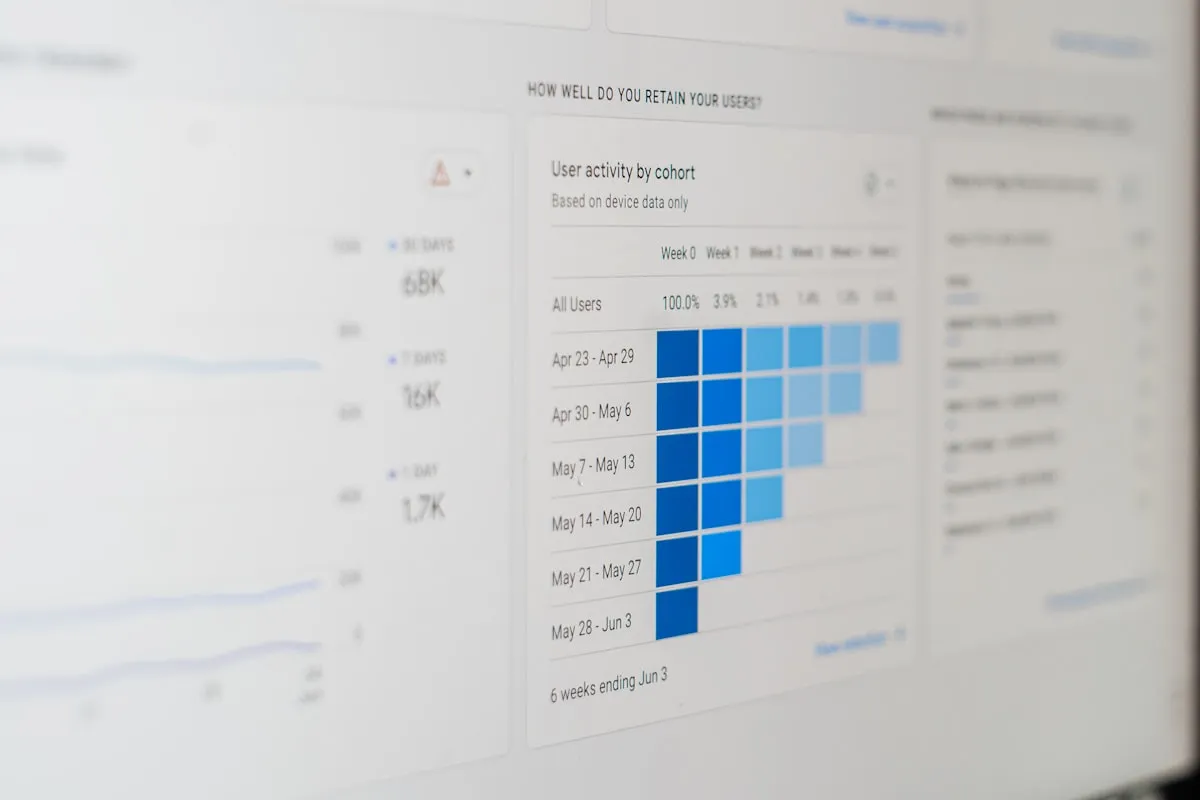
- Organic traffic to treatment pages (Google Analytics 4, filtered by landing page)
- Map pack impressions and clicks (Google Business Profile Insights)
- Keyword rankings for your top 20 treatment + city terms (Ahrefs, Semrush, or Google Search Console)
- Conversion rate from organic traffic to booked appointments
- Review velocity (new reviews per month on Google)
- AI Overview citations for your target treatment queries (manual audit or third-party tools)
- Click-through rate for pages ranking in positions 1-10 (Search Console; below 2% means your title and description need rewriting)
The only number that ultimately matters is how many new patients walk through your door from organic search. Use our patient lifetime value calculator to put a dollar figure on each organic lead and measure SEO ROI against patient LTV, not just cost per click.
Ready to grow your practice?
Get a custom strategy for your med spa
Schedule Your Practice Growth SessionNo commitment required. No credit card.
Your 30-day quick start
If you are starting from scratch (or starting over), focus on these items in your first month:
- Fully optimize your Google Business Profile using the GBP checklist above. Set categories, upload photos, pre-populate Q&A, start posting 2-3 times per week.
- Create or rewrite your top 3 treatment pages with 1,000+ words, question-based headings, proper title tags, FAQ sections, and specific data points.
- Implement schema markup on your homepage (LocalBusiness/MedicalBusiness) and top treatment pages (Service, FAQPage).
- Set up Google Search Console, submit your sitemap, and run a Core Web Vitals check. Fix any failing metrics.
- Launch an automated review request system targeting 8-12 new Google reviews per month.
- Audit your AI visibility. Search your top 10 treatment + city queries in ChatGPT, Perplexity, and Google. Note where you appear and where competitors are getting cited instead.
These six actions will put you ahead of 80% of med spas in your market. Everything else builds on this foundation.
Pair this SEO foundation with Google Ads for immediate visibility while your organic rankings build. The combination gives you both short-term leads and long-term compounding growth. And the same structured content that earns top organic rankings also fuels AI search optimization, so the work compounds across both traditional and AI search surfaces.
The practices we work with at Pronk MedSpa Marketing typically see measurable ranking improvements within 60-90 days of implementing this checklist. The compound effect kicks in around month 6, when organic traffic starts growing exponentially instead of linearly. Schedule a Practice Growth Session to see how SEO fits into your growth plan.