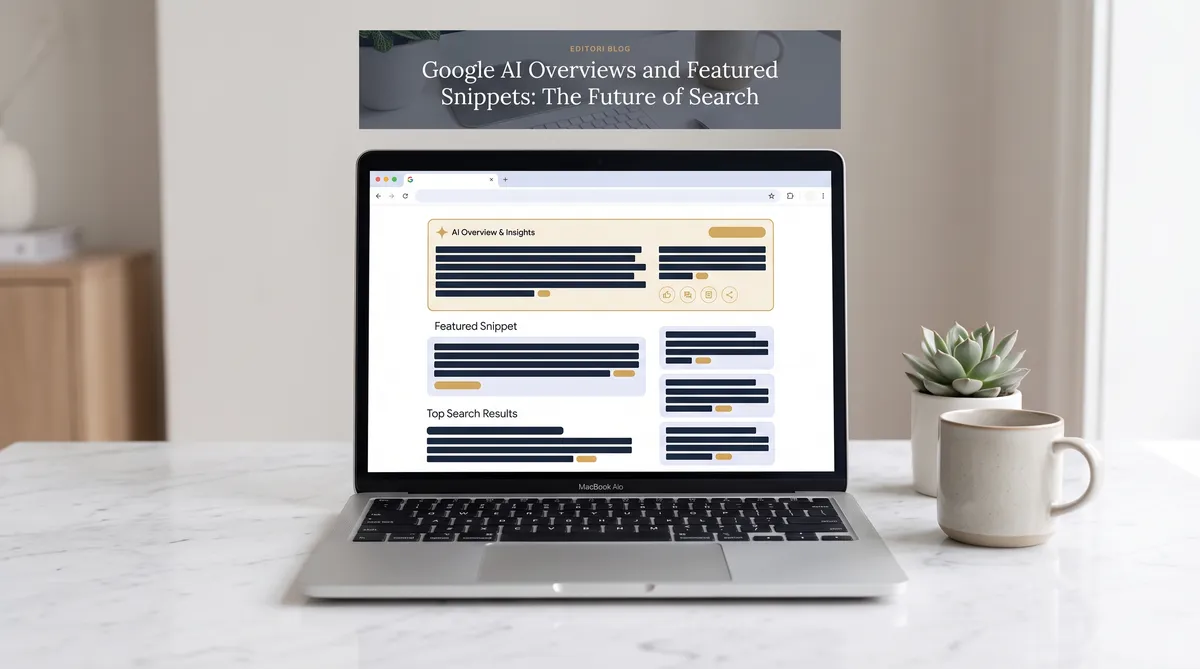
Your future patients are asking ChatGPT which med spa they should visit. They are typing questions into Perplexity like "best Botox provider near me" and getting direct answers with specific practice names. Google is generating AI Overviews that recommend three or four med spas before a user ever sees a traditional search result.
And your practice is nowhere in those answers.
For the complete guide to AI search optimization for med spas, read AI Search Optimization for Med Spas: A Step-by-Step Guide.
This is not a hypothetical future. It is happening now, and the gap between practices that AI systems recommend and those they ignore is growing every month. According to Google's own research on Search Generative Experience, AI Overviews now appear for over 30% of search queries. For local service queries (the exact type med spa patients use), that number is even higher.
The practices winning in AI search did not get there by accident. They built a specific kind of digital presence that large language models recognize and trust.
Why AI systems recommend some med spas and ignore others
AI recommendation engines do not work like traditional search. Google's algorithm ranks pages. AI systems synthesize entities. That distinction changes everything about how you approach visibility.
When a patient asks ChatGPT "Where should I get lip filler in Scottsdale?", the model scans its training data for patterns. It looks for practices mentioned frequently across multiple authoritative sources. It cross-references review sentiment, treatment specificity, and how well a practice's information matches the user's intent.
Perplexity works differently still. It performs real-time web searches, reads multiple pages, and synthesizes an answer. It favors sources that directly answer questions in structured formats. If your website has a comprehensive FAQ section about lip filler that matches the query pattern, Perplexity is more likely to cite you.
Google AI Overviews draw from the top-ranking organic results in traditional search. If you already rank in positions 1 through 5 for a given query, you have a real shot at being cited in the AI Overview. If you sit on page two, you are invisible to both systems.
The common thread across all three: entity authority. AI systems trust practices that show up consistently, with detailed information, across many trusted sources.
The five signals AI systems use to evaluate your practice
We monitor AI visibility across ChatGPT, Perplexity, Gemini, and Google AI Overviews for every practice we work with. After tracking thousands of AI-generated recommendations over the past year, clear patterns emerge in what gets cited versus what gets ignored.
¶1. Review volume and sentiment at scale
73% of AI-cited med spas have 80+ Google reviews with an average rating above 4.7. That is not a coincidence. AI systems treat review profiles as a proxy for quality and authority. A practice with 14 reviews (even if they are all five stars) simply does not register as a notable entity.
The threshold is not just total count. Recency matters. A practice that received 40 reviews in the past 90 days signals active relevance in ways a practice with 200 reviews from three years ago does not.
Your review generation strategy needs to produce consistent weekly volume, not sporadic bursts.
¶2. Structured, question-answering content
LLMs are trained to answer questions. If your website already answers those questions in a structured format, you become a source the model can draw from.
This means every treatment page on your site needs:
- A clear FAQ section with 5 to 8 real patient questions answered in detail
- Headers formatted as questions (H2 and H3 tags) that match how patients phrase queries
- Specific pricing ranges, treatment timelines, and candidacy information
- Comparison content (treatment A vs. treatment B) that mirrors how patients evaluate options
Generic marketing copy with no substance gets ignored. AI systems favor pages that contain specific, factual, citable information.
¶3. Consistent entity data across the web
When ChatGPT encounters your practice name, it tries to build an entity profile. It pulls from your website, Google Business Profile, Yelp, RealSelf, Healthgrades, your social media bios, and every directory listing you have ever created.
If your address is slightly different across three platforms, or your phone number is outdated on Yelp, or your treatment list on Healthgrades does not match your website, the AI system loses confidence in your entity. Low confidence means fewer recommendations.
Your Google Business Profile is the anchor of this entity data. Every other listing should match it exactly.
¶4. Topical authority and content depth
AI systems do not recommend practices that have a single page about Botox. They recommend practices that demonstrate deep expertise through interconnected content covering multiple aspects of a topic.
A med spa with:
- A primary Botox treatment page
- A blog post comparing Botox vs. Dysport
- A page covering Botox pricing and expected costs
- Content about Botox for specific concerns (TMJ, hyperhidrosis, brow lift)
- Before-and-after galleries with treatment descriptions
...registers as an authoritative Botox provider. A med spa with one paragraph about Botox buried on a general services page does not.
This is the same topical authority concept that drives traditional SEO for med spas, but AI systems weigh it even more heavily because they need confidence before recommending a specific practice by name.
¶5. Third-party mentions and citations
Your own website is not enough. AI systems place higher trust in information confirmed by external sources. If a local publication wrote about your practice, if you were quoted in a health and wellness article, if RealSelf has your profile with verified patient reviews, these third-party citations multiply your entity authority.
This does not mean you need PR coverage in the New York Times. Local newspaper features, guest posts on industry blogs, and verified profiles on medical directories all contribute to the citation web that AI systems use to validate recommendations.
How to audit your current AI visibility
Before you optimize, you need a baseline. Here is how to check where you currently stand.
Open ChatGPT, Perplexity, and Google (with AI Overviews enabled) and run these queries:
- "Best med spa in [your city]"
- "Where to get [your top treatment] in [your city]"
- "[Treatment] cost in [your city]"
- "Top rated [treatment] near [your city]"
- "Med spa recommendations [your city]"
Document which practices get mentioned. Note the specific reasons AI systems cite when recommending them. If your competitors appear and you do not, study what they have that you lack. Nine times out of ten, it comes down to review volume, content depth, or citation consistency.
Run these same queries monthly. AI outputs shift as new training data and web crawl results feed into the systems.
Your 90-day AI visibility action plan
Practices we optimize for AI search see 18-34% more discovery-stage inquiries within 90 days. That growth comes from a structured approach, not from guessing.
¶Days 1 through 30: Fix your foundation
Audit every directory listing for NAP (name, address, phone) consistency. Update your Google Business Profile with complete treatment categories, current photos, and weekly posts. Ensure your website has individual treatment pages with structured FAQ sections.
If you have fewer than 50 Google reviews, building review velocity is your single highest priority. Implement a post-treatment review request system that runs automatically after every patient visit.
Review your website's schema markup. You need LocalBusiness, MedicalBusiness, FAQPage, and Service schemas implemented correctly. These structured data formats make it easier for AI crawlers to understand what your practice offers and where you operate.
¶Days 31 through 60: Build content depth
Publish two pieces of treatment-specific content per week. Focus on question-answering formats. Use headers that mirror actual patient queries.
Create comparison content for every treatment where alternatives exist. "CoolSculpting vs. Liposuction," "Botox vs. Dysport," "Morpheus8 vs. Microneedling." These comparison queries are among the most common questions patients ask AI systems.
Update existing treatment pages with more specific information: pricing ranges, session counts, downtime expectations, and candidacy criteria. The more specific data points your pages contain, the more likely AI systems are to cite them.
¶Days 61 through 90: Expand your citation footprint
Claim and fully complete profiles on RealSelf, Healthgrades, Zocdoc, and Vitals. Respond to every review on every platform. Publish a guest article on a local health or lifestyle publication. Get quoted as a source in at least one industry piece.
Submit your sitemap to Google Search Console and verify all pages are indexed. A page that is not indexed cannot appear in Google AI Overviews, and unindexed content does not feed LLM training data.
According to BrightLocal's 2025 local citation research, businesses with consistent citations across 40+ platforms rank significantly higher in local results. Those same platforms feed the data that AI systems use to generate recommendations.
¶Ongoing: Monitor and adapt
AI search is not a one-time project. Models update their training data. Google refreshes AI Overviews weekly. Perplexity crawls in real time. Your competitors are building their authority too.
We track AI visibility metrics alongside traditional SEO reporting for every practice in our portfolio. When a competitor begins appearing in AI results for your target queries, we identify why and adjust strategy within days, not months.
What most agencies get wrong about AI search optimization
The biggest mistake we see: treating AI search like it is just "SEO with extra steps." It is not. The ranking signals overlap, but the weighting is different, and the output format changes how patients engage with results.
In traditional search, you win by ranking higher than competitors on a results page. In AI search, you win by being named specifically in a synthesized answer. There is no position two. The AI either recommends you or it does not.
This makes authority signals (reviews, citations, content depth) disproportionately important compared to traditional ranking factors like backlink volume or keyword density. A practice with 200 detailed reviews and comprehensive treatment content will get recommended over a practice with more backlinks but a thin online presence.
The practices gaining ground in AI search right now are the ones that started building authority six months ago. The best time to start was then. The second best time is this week.
Your SEO foundation still matters. Without it, you have nothing for AI systems to draw from. But layering AI-specific optimization on top of that foundation is what separates practices that get recommended from those that stay invisible.
Measuring the ROI of AI search visibility
Tracking AI-generated patient inquiries requires a different attribution model than traditional search analytics. You cannot see "ChatGPT" as a referral source in Google Analytics. But you can measure the downstream effects.
Add "How did you hear about us?" to your intake forms with "AI assistant (ChatGPT, Perplexity, etc.)" as an option. Track branded search volume month over month. Monitor direct traffic spikes that correlate with your AI visibility improvements.
We use our patient lifetime value framework to calculate what AI-generated discovery is worth per practice. When a single AI recommendation drives a patient who books a $3,000 treatment package and returns quarterly, the revenue impact of AI visibility becomes obvious.
Start before your competitors do
Every city has a limited number of med spas that AI systems will recommend for a given treatment query. Once a competitor establishes entity authority in your market, displacing them takes significantly more time and effort than building that authority yourself from scratch.
The window for early-mover advantage in AI search is closing. Practices that invest in structured content, review velocity, and citation consistency now will own AI recommendations in their markets for years.
If you want to see exactly where your practice stands in AI search results today, and what it will take to get recommended by name, we will show you.
Ready to grow your practice?
Get a custom strategy for your med spa
Schedule Your Practice Growth SessionNo commitment required. No credit card.